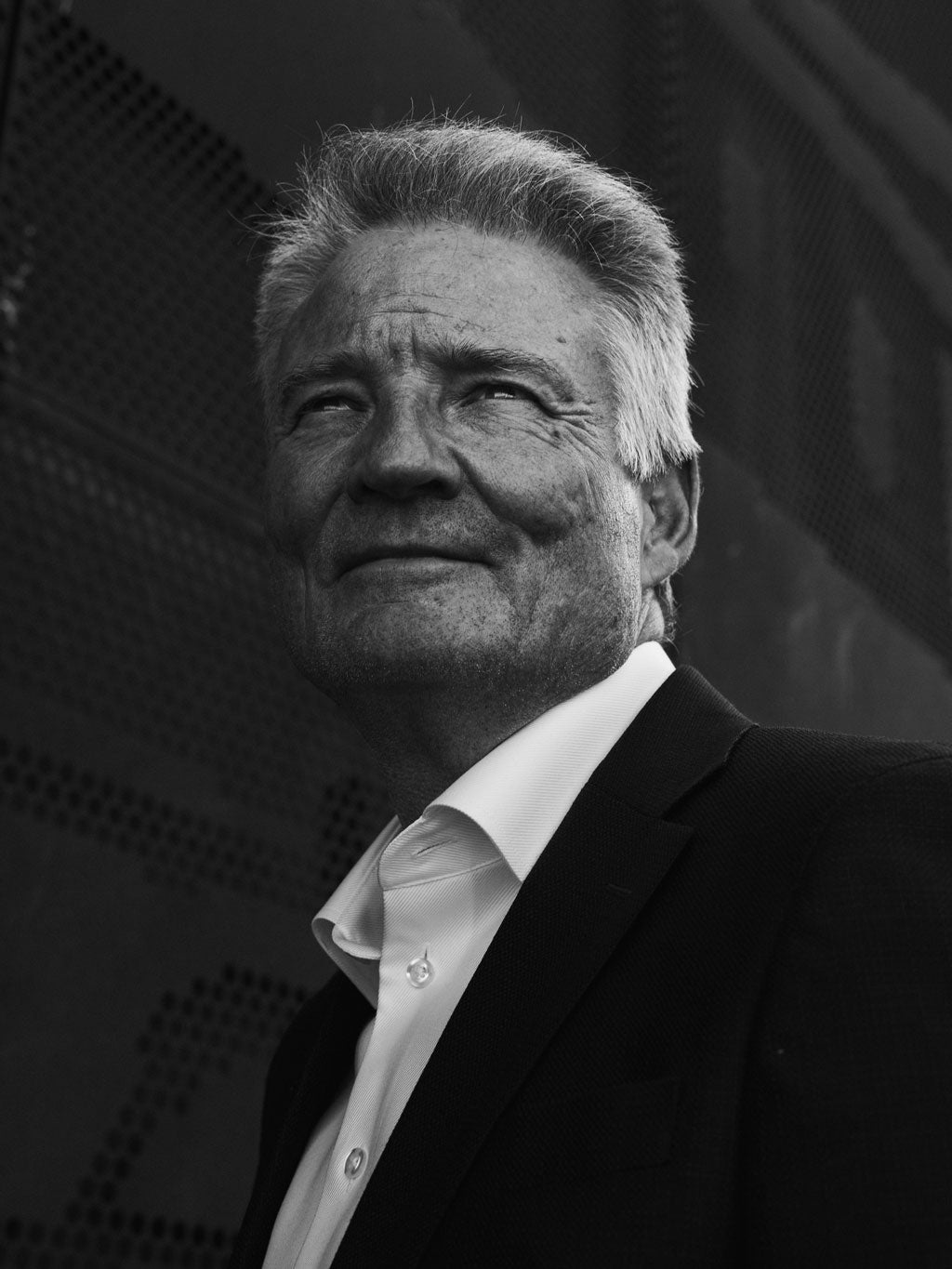
We need to go back to March 2013. It's a dark time for Birger Baylund. The bank wants to force him to sell the company he started almost ten years earlier to what Birger calls a grave robber — for the debt and a bus ticket. He sleeps at the office, in a small room in the old DR city in Søborg. He has covered the light sensor so the automatic light doesn't wake him when he turns. His wife has kicked him out.
But the bank had given him three months to find a buyer himself.
“Damn, I felt terrible. I was about to get divorced, I was going to the dogs. I was kicked out of my home because, honestly, I was unbearable. I slept in this room. I was broke. Someone wanted to take my company from me. Now it was like a chess clock, tick, tick, tick. He was doing due diligence, and he wanted to cheat everyone,” says Birger Baylund.

Entrepreneurship in the Blood
Birger Baylund has entrepreneurship in his blood. His father owned a wholesale business that sold screws, bolts, and nuts to auto repair shops. As a child, Birger stocked shelves. It's the classic story. You become an entrepreneur because your father was one.
But not Birger. Not right away, at least.
He quickly became a student, earned a master's degree, and got jobs in large companies. In his mid-40s, he was the director for the Nordics at Dun & Bradstreet – a large American company. He loved the Americans' demand for “double-digit growth” and “speed.” He loved traveling all over Europe and meeting other cultures.
And then. When he was 45 years old, he quit the international career and became self-employed.
“My father was an entrepreneur, so I've had it in my blood. I just didn't really know it until I was 45. Yes, and I can get cold sweats thinking about it. I had four children, two cars, dogs, and a house. But it's only now that I feel that way. Back then, I didn't get cold sweats,” says Birger Baylund.
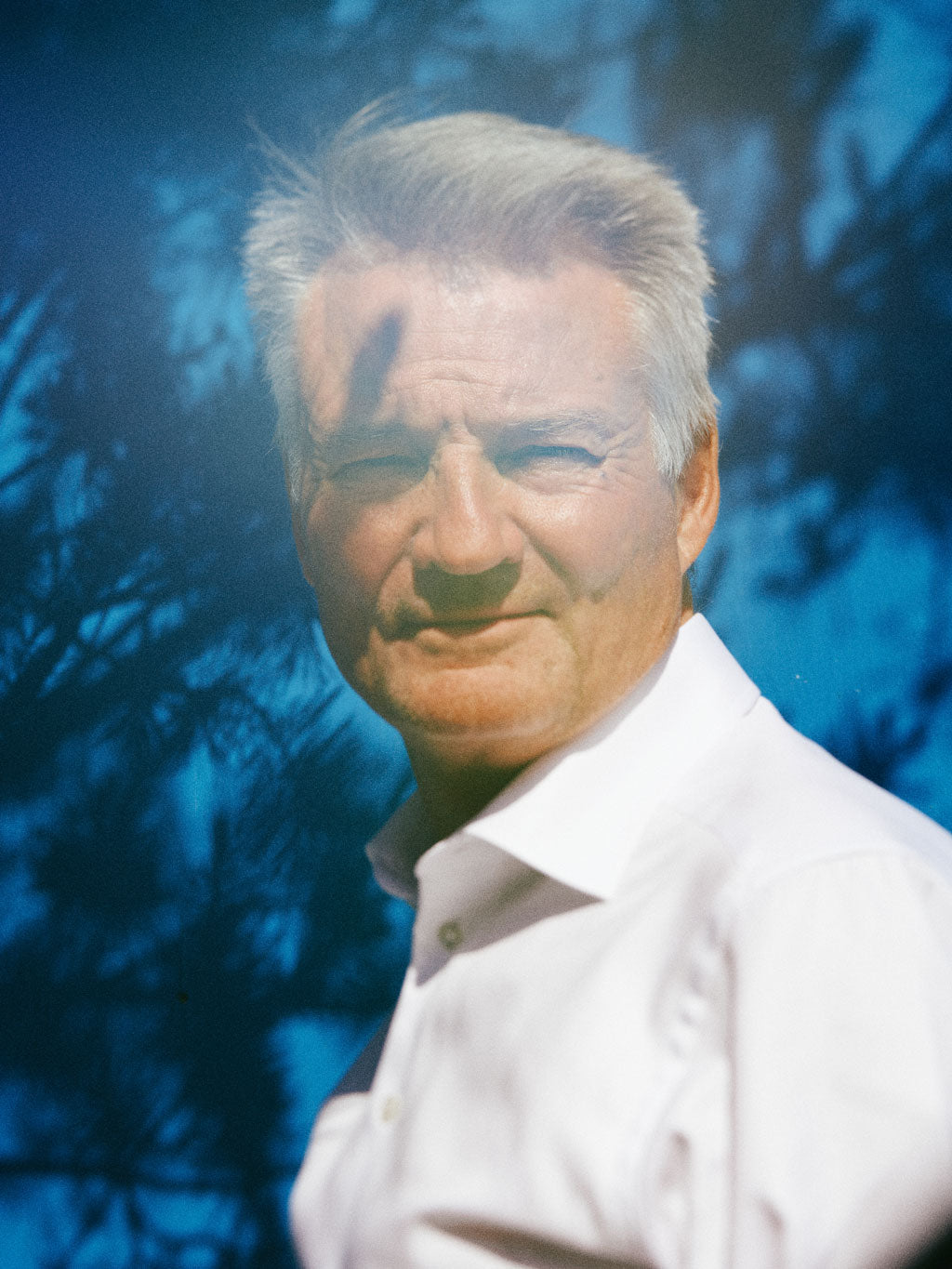
Registered in RKI
Birger Baylund's idea was simple. Only about half of all the country's bad payers were registered in RKI. Therefore, he believed it must be possible to break RKI's monopoly on providing credit information to telecom companies, banks, and others with private customers. He jumped into it and founded Debitor Registret in the garage at home in Nivå. The idea was simple, but the execution was far from it.
“It's like starting a real estate agency without houses in the window. You need to get the bad payers into your database. In 2008 – after four years – we had 70% of RKI, and we got our first customer. So for four years, I burned money with very little income,” says Birger Baylund.

Merging with the Company
In the coming years, Debitor Registret is a big part of Birger Baylund's life. Several times, the cash is about to run out, and Birger has to find money in banks and from investors to keep the company afloat. One Friday in the summer of 2006, things are really bad. The cash is empty, the bank overdraft is exceeded, and Birger has to pay salaries to the employees next Tuesday.
“The next step is that my pension plan, my house, and my children would have to be put in the pool,” as Birger Baylund puts it.
Fortunately, he has cultivated contact with a potential investor, EBH Bank. And that's why he's sitting this Friday in 2006 in a too-small, too-hot meeting room negotiating with the bank. With his back against the wall, he plays a high-stakes game and demands that the deal be put on paper immediately.
“I'm completely calm in those situations. I think I've inherited my father's calm. But you're right, it's exciting right there. It was actually so exciting that I've given lectures about those 5-10 minutes. About all the little details in the room, the curtains, how the wind blew in, the temperature changed. To the point where I nudged my own lawyer so he realized I wanted something,” says Birger Baylund about the day he secured 20 million kroner and salaries for the employees with a last-minute save. However, the great commitment also means that Birger gradually almost merges with Debitor Registret. It takes a toll, and therefore Birger today has good advice for all the many passionate entrepreneurs and career makers. “I took everything personally. It was like an attack on my body in a way, and I didn't have a defense mechanism. I think many entrepreneurs feel that way, and they need to learn to separate it,” says Birger Baylund.
It was a business psychologist who taught him that when everything looked darkest.
“Birger, she said. This is you, and this is Debitor Registret. But that's not how it is – right now you are one. And you need to separate that, and I will help you with it,” he says and continues: “I became aware that it was true. And then I worked for several weeks to define who I was and who Debitor Registret was – it's one of the best things I've done for myself.”

Luck Runs Out
In March 2013, however, luck is running out. Debitor Registret's loan has ended up in Financial Stability, which now wants their money. They have also found a buyer, the grave robber from the beginning of the story — the one who wants to buy Birger's life's work.
“I've run out of money many times, but I've managed to move on,” says Birger Baylund.
However, the bank has given Birger three months to find a buyer, and he has managed to get an offer from Bisnode, a Swedish company that Birger knows from before. Birger has now reached the point where he has separated himself from Debitor Registret and regained a cool overview.
“So I call Bisnode in Stockholm and say; the board has gone through the various offers, and you are not among the top three we want to proceed with. I'm sorry about that. I was really playing a high-stakes game, I had only received an offer from them,” says Birger Baylund and laughs: “Fortunately, they called in the afternoon and asked what it would take for them to get on the list, and for it to be only them we talked to.”

Three months later, he had sold Debitor Registret and started a new job where he was to integrate Debitor Registret into Bisnode. Four years later, the task was completed, and he left Bisnode. Birger had agreed with his wife, with whom he had reconciled, that they would now go to Mallorca, fish, and enjoy life.
The Movement Wins Again
“On the way to the travel agency and to the fishmonger, my boss calls. He says: Birger. Wouldn't you like to be the head of all our European countries? I think you could be good at it. He hits back to the good times at Dun & Bradstreet and Europe. So I went home to my wife and said; honey, we need to talk about this, because I had promised her that if I were to have a job again where I travel, we should agree. We agreed on two things. She quits her job, so she doesn't have to work anymore. Two. That she can travel with me when it suits,” says Birger Baylund
In September 2017, he started the job he has today, where he is the director of Bisnode's European business. Again, Birger has chosen movement and the new – not stagnation.

Birger Baylund in The CEO
MAN IN THE SHIRT “The credit belongs to the man who is actually in the arena, whose face is marred by dust and sweat and blood” - quote Theodore Roosevelt in Paris, 1910. In the portrait series “Man in the Shirt,” BARONS meets business people who have in common that they have put themselves in play and at risk. Where do they find courage? What is the most important thing they have learned along the way? And what can the rest of us learn from them?